
Stone veneer, the most popular
Stone veneer is the most popular finish for a block island, and it's what most people picture. It suits houses that already have stone accents and pairs well with a natural stone counter.
Tired of a grill on wheels and no counter space? We build a block island with the grill, gas and power planned in from the start.
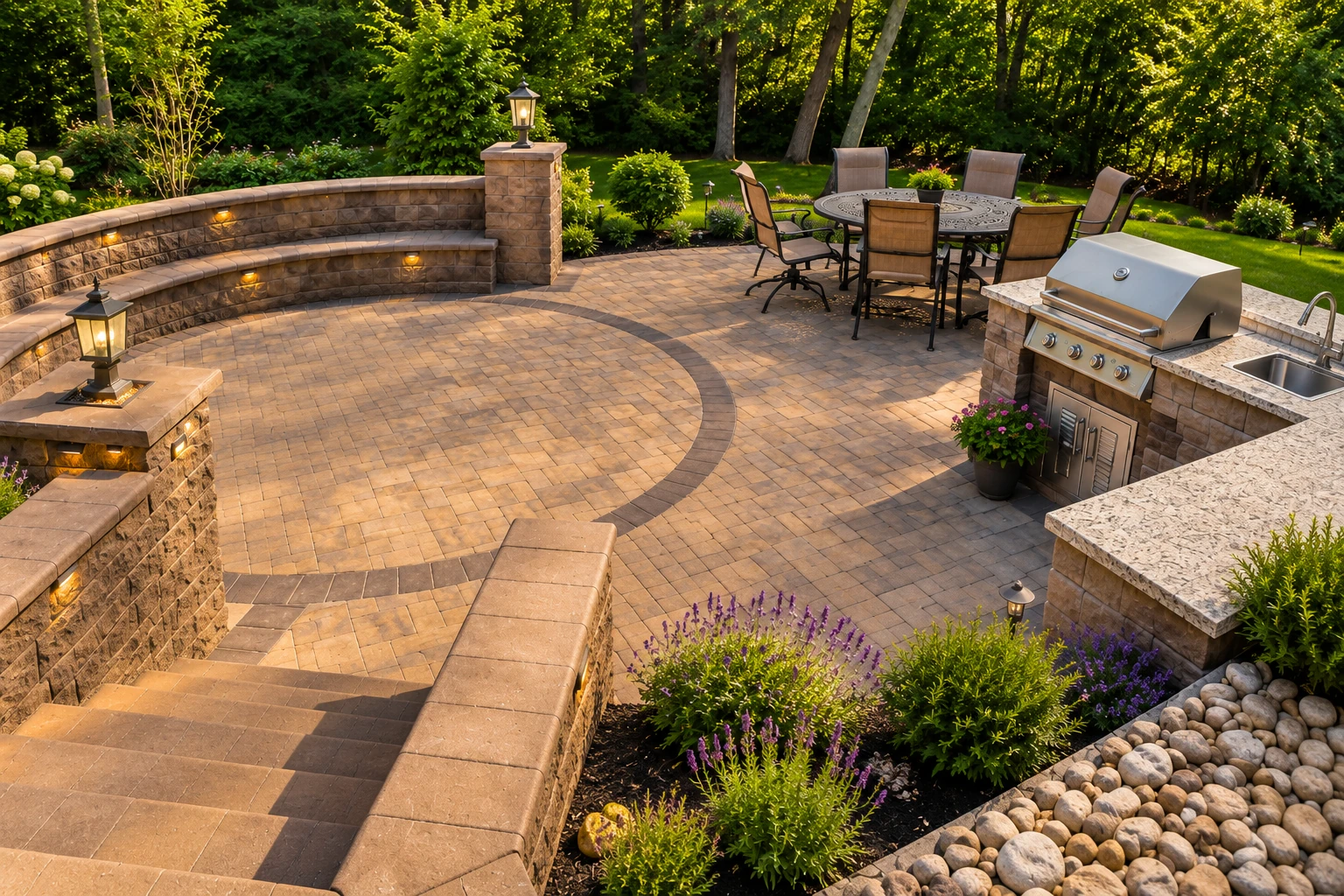
Outdoor kitchen masonry in Rialto means building a grill island or counter from concrete block and covering it with a weather-resistant finish like stone, brick or stucco, so you get a solid cooking station that holds up outside and looks like part of your yard.
Most people who call us have a rolling grill and a patio that never quite works for cooking. The price moves with the size and shape of the island, the finish and counter you pick, and whether gas, water or power lines are already there or have to be run new. The schedule depends on how fast the grill and the utility plan get settled, and on how long the city's plan review takes if the job needs a permit. When I come out, I measure, take photos and give you a written estimate that says what we'll do and why, so you see your own number.
Fieldstone Rialto Concrete and Masonry is licensed and insured, and we're based in Rialto and work in the cities around it. The state licensing board's masonry classification is the one that covers concrete block and natural and manufactured stone, which is what an island is built from.
I'm the one who comes out and writes your estimate, and I'm on site running our crew during the build, so what we talk through in your yard is what gets built.
If your yard can take the island you want, I'll say so, and if it can't, I'll tell you that too. Nobody should sit around wondering where their project stands.
A kitchen that has to be torn out and rebuilt costs you twice, so we take our time up front on the grill opening, the lines and the base to build it once.
Before we lay a single block, I ask for your grill model, because every grill has its own cutout size, depth and support it needs, and the opening has to be built to match it. If you haven't bought one yet, settle on the exact model first, since switching grills after the walls are up usually means cutting into finished masonry.
We also plan where gas and power will run before we start, so the gas piping and electrical conduit, the tubing that carries the wires, go up through the hollow cores of the block as the walls rise instead of being cut in later. Down at the base, a masonry building guide calls for flashing at ground level and a waterproof coating on the lowest block before the finish goes on, because rain, sprinklers and patio splash hit that spot all the time. If you want a path out to the kitchen, our walkway construction work can bring one right to the island, and brick wall installation can close in the patio around it.
Here in Rialto, check one more thing early. The city's fire department says homeowners in a High Fire Hazard Severity Zone must make sure new construction and renovations follow Wildland-Urban Interface building codes, the rules for homes near open wildland. If your house sits in one of those zones, I'd rather know while the island is still a sketch, so the design and materials are settled before the walls go up.
Stone veneer is the most popular finish for a block island, and it's what most people picture. It suits houses that already have stone accents and pairs well with a natural stone counter.
Brick veneer gives the island a more traditional look, and it's a good pick when your house or garden walls are already brick, so the kitchen looks like it was always there.
Stucco gives a clean, modern look at the lowest cost per square foot of the three finishes, so it's the one to look at when you're watching the budget closely.
Concrete counters are porous and need regular sealing, and fine hairline cracks are common in our dry inland climate, where days and nights swing fast. Those cracks are usually cosmetic.
Send the form and we'll get back to you within one business day. I'll come out, walk the yard with you, measure and take photos, then give you a free written estimate, with no pressure to book.
It's the first thing I'll ask, since the opening is built to fit it. If you're still shopping, that's fine, though we'll need the exact model before building starts.
Show me where the gas line, the panel or the nearest outdoor outlet sits, because how far the lines have to run to the island changes the estimate.
Photos of stone, brick or stucco you like help a lot, since the finish is one of the bigger pieces of the price and I can price the one you want.
These photos show stone veneer, brick and stucco finishes and island layouts we can talk through when we look at your yard together.
Straight answers to the questions that come up when you're planning a masonry grill island in Rialto, from cost and permits to upkeep.
An installed built-in grill island usually costs about $3,000 to $10,000 per job across the US, and that's a national figure, not a Rialto quote. Those prices assume the patio and utility lines are already in place, so new gas, water or electrical runs come on top. Your written estimate shows your own number, and the work is backed by our satisfaction guarantee.
Rialto's Building Department handles plan check, permits and inspections in the city, and you can reach it at 909.820.2505, option 1. The city lists a 30-day review time for plans in review, so build that wait into your schedule. When a job needs a permit, we handle the application with that office and we're there for the inspections, and if I'm not sure yours needs one, I check with them before we start.
Plan on a quick check once a year. A masonry building guide suggests looking over the mortar joints for cracks, checking the counter's seal, making sure gas connections are tight and cleaning the stone or brick, then putting stone sealer back on every 2 to 3 years. Catching a cracked joint early keeps water out of the block.
Most grill makers require non-combustible materials, ones that won't burn, within 6 inches of the grill opening. Block, brick and stone don't burn, but a wood trim piece or accent near the grill could be a problem, so check your grill's installation instructions and ask how the island design meets them for your model.
Usually, yes. A masonry building guide puts a typical 8-foot grill island at 3,000 to 5,000 pounds once it's finished, so it sits on a reinforced concrete slab rather than loose pavers or bare dirt. Ask how the slab will be sized for your island, and I'll walk you through it at the estimate.
Call (909) 546-5001, email hello@rialtoconcreteandmasonry.com or use the form, and we can get your plan and any permit review moving before cooking season.