
Brick house walls
Joints near downspouts, sprinkler heads and the base of a wall usually wear first. We repoint the worn sections and match the color and shape of the joints around them so the repair blends in.
Crumbling or cracked mortar between your bricks? We cut out the worn joints and refill them so your wall is solid again.
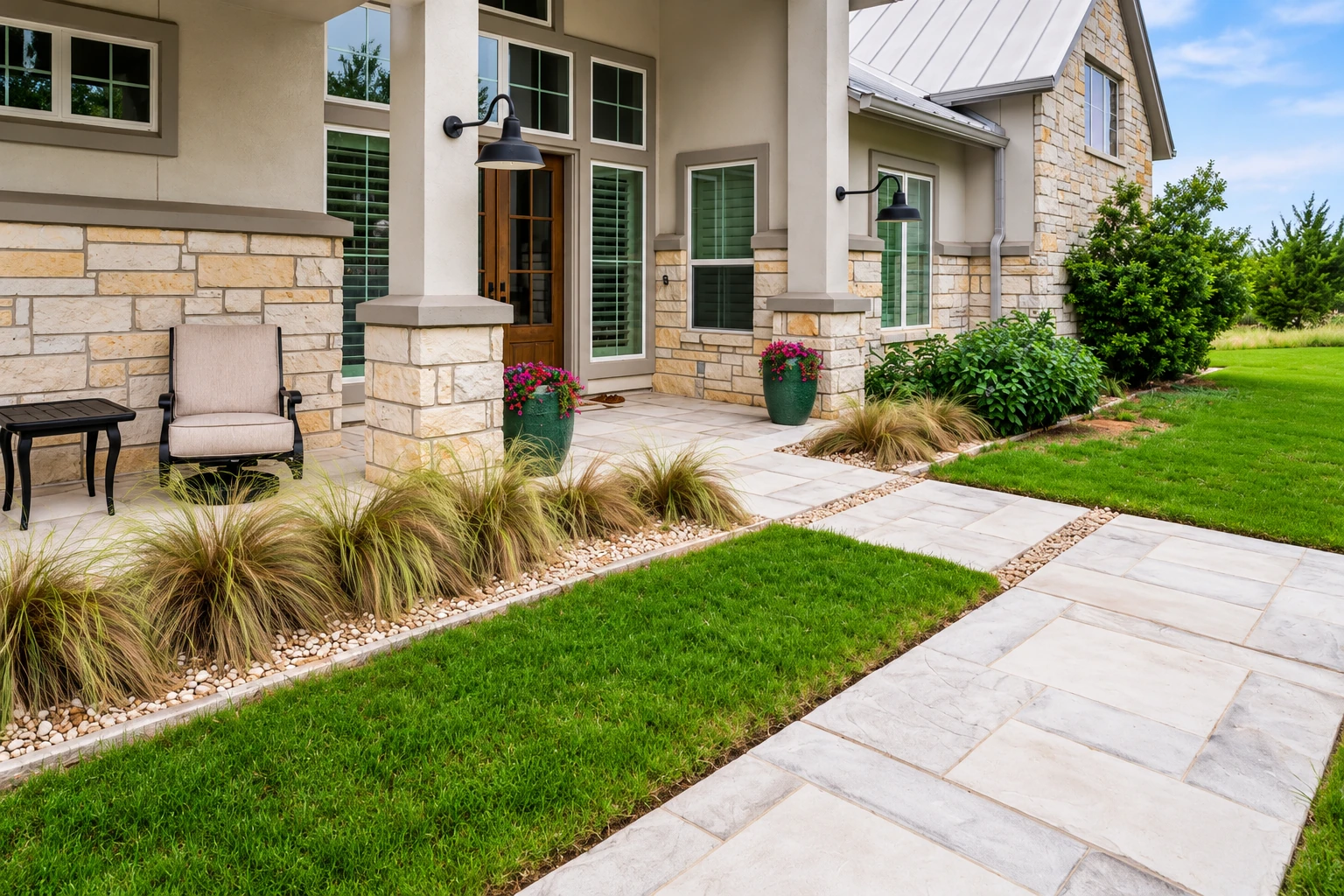
Tuckpointing, which masons also call repointing, means cutting out the worn mortar between your bricks or blocks and filling the joints with fresh mortar, and Fieldstone Rialto Concrete and Masonry does it for homes in Rialto and the cities around it while the wall stays right where it is.
What moves the price is how many square feet of joints need cutting out, how far back the mortar has worn, how easy the wall is to reach and whether it's brick or block. The schedule mostly turns on the size of the wall and on the permit, if the job needs one, and the written estimate I give you after walking the wall lays out what we'll do and why.
Whether tuckpointing needs a permit isn't something I guess at. Before we start, I check with the office that covers your address, which inside Rialto is the city's Building & Safety Department, and if a permit is needed, we handle the application and we're there for the inspections.
I come out to look at the wall and write the estimate myself, and I'm on site running the crew, so the person who priced it is the one making sure it's done that way.
If your joints only need a few patches, or the brick itself is the real problem, I'll tell you that plainly instead of selling you a whole wall of tuckpointing.
A wall that has to be redone costs a family twice, so we take the time to cut each joint deep enough and pack it full the first time.
We cut the worn mortar out of each joint and refill it with a mix that's no harder than what's already in the wall, because hard mortar on older brick can chip the faces off the bricks. The brick should be the stronger part, so if something gives years from now, it's a joint you can repoint again and not a brick you have to replace.
Cutting out is the step I watch closest. Hand tools are often enough for a small patch, and a grinder is faster on a big wall but can nick the brick edges if it's rushed. We run vacuum shrouds on our grinders to keep the dust down, so it isn't drifting across your yard or in through an open window.
Sometimes the joints aren't the whole story. Cracked or loose bricks get replaced as part of our brick repair work before the new mortar goes in, and if you're also planning new driveway pavers, it makes sense to finish the wall first so the cleanup from the brickwork isn't landing on fresh pavers.
Joints near downspouts, sprinkler heads and the base of a wall usually wear first. We repoint the worn sections and match the color and shape of the joints around them so the repair blends in.
Block walls get tuckpointed too when the cracking stays in the mortar. If a crack runs through the blocks themselves or the wall is leaning, that's a bigger repair, and I'll tell you so.
Worn mortar on a chimney is worth catching early as regular upkeep, before bricks near the top start working loose. When it needs more than new joints, that becomes chimney repair.
Low brick planters, steps and garden walls take water and foot traffic, so their joints often go before the house's do. They're small jobs, and worth doing before bricks start coming loose.
Send the form and we'll get back to you within one business day. I'll come out, walk the wall with you, take measurements and photos, and give you a free written estimate with no obligation to book.
A few clear photos of the cracked or crumbling joints let me see what I'm walking into, so the visit goes straight to the part of the wall that needs it.
A rough length and height, even paced off, gives me a starting point for how much joint work there is before I bring out the tape measure.
The estimate you get says what we'll do and why, so you can compare it, think it over or ask me about any line before you decide.
These photos show joint shapes, mortar colors and brick and block walls we can talk through when you're picking how yours should look.
Here's what people ask me most about worn mortar, what repointing costs, how long it holds up and who can do the work.
Across the US, repointing brick usually costs about $500 to $2,500 per 100 square feet of wall, and that's a national guide, not our price. Taller walls that need scaffolding cost more per square foot than low ones. I'll measure your wall and put your figure in a written estimate, and the work is backed by our satisfaction guarantee.
Crumbling mortar, gaps or holes in the joints and hairline cracks in the mortar are the usual signs. Cracks between the brick and the mortar count too, and so do joints worn back more than 1/4 inch from the brick face. Point out those spots when I come for the estimate so I can look closely at each one.
Not by much. San Bernardino County encourages repointing as part of regular chimney upkeep, but says it does little to reduce damage in future earthquakes. Older unreinforced brick chimneys with worn mortar are the most at risk, though even chimneys built to modern standards can be badly damaged. So treat tuckpointing as maintenance, and strengthening as a separate question.
Only a very small one. The state's limit for work done without a contractor's license is $1,000, raised from $500, and it applies only when the job needs no permit and the person has no one working for them on it. We're licensed and insured, so that limit doesn't come into it on your job.
Mortar joints typically last more than 25 years, depending on how exposed the wall is and the mortar used, while the bricks may well last more than 100 years. So over the life of a brick house, you can expect the joints to need some repair now and then, and that's normal upkeep, not a sign the wall is failing.
Call (909) 546-5001 or send the form with a few photos and the wall's rough size, and I'll tell you straight whether it needs tuckpointing.