Front walls and lower bands
Stone across the lower part of a front wall gives the house some weight from the street. On an outside wall, the water work behind it matters as much as the stone you pick.
Plain, tired or patched walls get a real stone finish, starting with a check that the wall underneath can carry it.
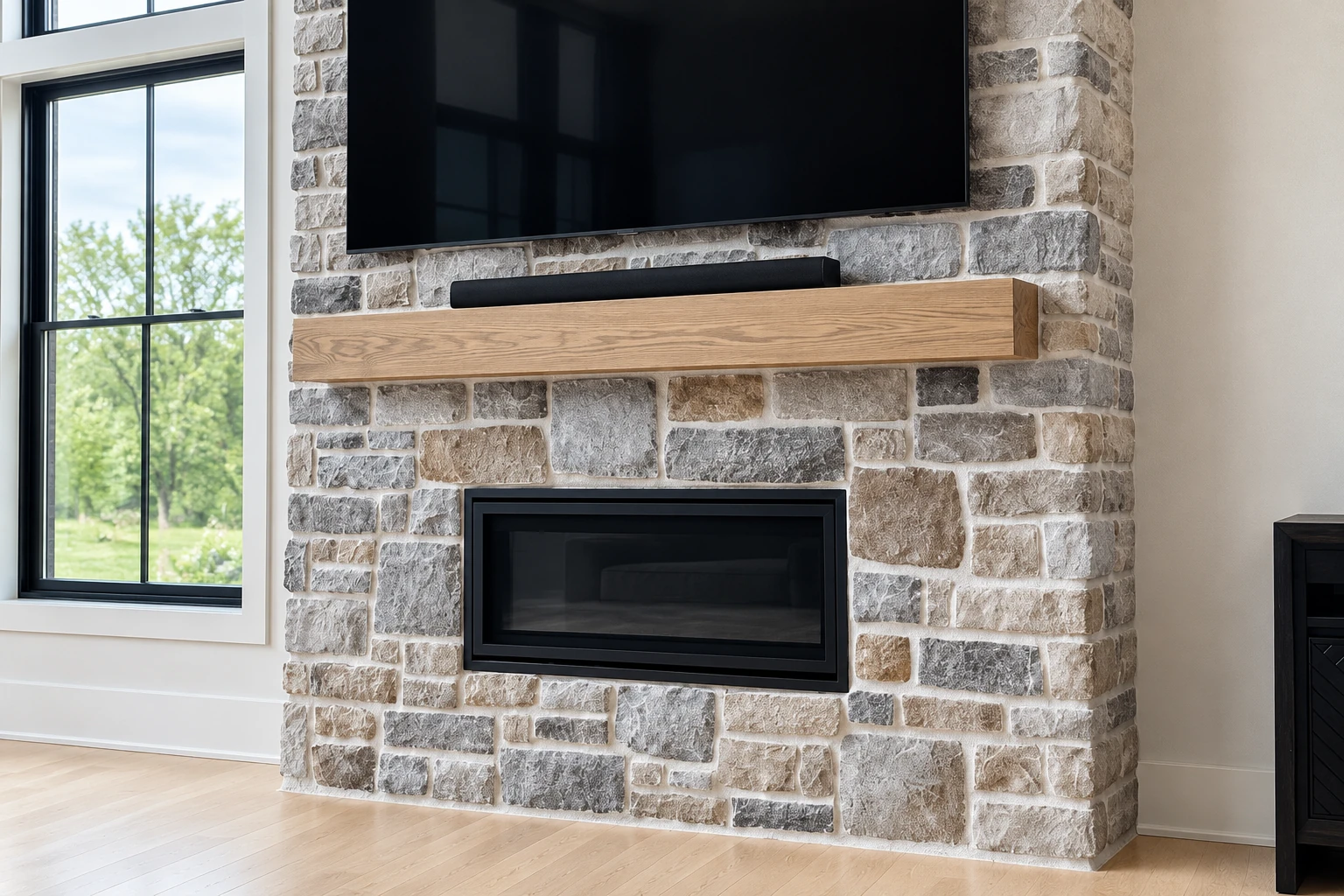
Stone veneer installation in Rialto means our crew bonds natural or manufactured stone to an existing wall with mortar, giving a plain block, concrete or framed wall the look of solid stone without building a new one.
The price mostly comes down to the stone you pick, natural or manufactured, the size and height of the wall, how many corners and edges it has, and how much prep the wall needs before stone can go on. The schedule turns on that same prep, plus whether a permit is involved and the weather on the days we set mortar. I'll put both in a written estimate after I've seen the wall.
We're based in Rialto and work across the cities around it. Outside work here has an extra rule to watch, because the Rialto Fire Department says homeowners in a High Fire Hazard Severity Zone must meet home hardening requirements and make sure renovations follow Wildland-Urban Interface building codes, the rules for homes near open wildland. If your house sits in one, I check what that means for your job before we start.
You'll hear yes or no fast, and if a job isn't worth doing I'll say so, because nobody should sit around wondering where their project stands.
We're licensed and insured, and California's contractors licensing board lists natural and manufactured stone among the work a masonry contractor installs, so this job sits squarely in our trade.
I come out for the estimate, and I'm on site running the crew when the stone goes up, so what we agreed on in your driveway is what gets built.
I check the wall underneath first, because stone is only as good as what it's holding onto. If the wall is cracking, crumbling or moving, I'll tell you stone isn't the answer yet. The veneer makers' installation guide says the same thing, that manufactured stone belongs on a sound wall and not over a failing one or over the foam-backed insulated finish some houses have.
When the wall needs work, that work comes first. A cracked or leaning yard wall may need rebuilding as one of our concrete block walls, and a weak base along the house can call for foundation block wall installation before any stone goes on. Doing it in that order costs a lot less than pulling stone off later.
On outside walls, our crew takes its time on the flashing, the thin metal and membrane pieces that steer water back out, since careful work on site is what keeps water from getting behind the stone. That guide calls for flashing at every spot something passes through the wall and along the bottom edge of the stone. An inside wall that stays dry doesn't need it.
Stone across the lower part of a front wall gives the house some weight from the street. On an outside wall, the water work behind it matters as much as the stone you pick.
Wrapping porch columns or entry posts in stone is a smaller job that changes how the whole front reads. Each post still needs a solid core and clean edges at the top and bottom.
Stone around an indoor fireplace turns a flat wall into the room's focal point. We look at the wall and the opening first, so the stone sits clean and square all the way around.
Plain block garden walls, planters and outdoor kitchen bases take stone well once the block is clean and solid. It's a good way to dress up a wall that's sound but looks tired.
We'll reply within one business day to set a time, then I come out, measure and photograph the wall, and give you a free written estimate. There's no obligation to book.
I measure the wall and take photos while we walk it together, so the estimate is built on your actual wall and not on a guess from a phone call.
The written estimate says what we'll do and why, including any repair the wall needs before stone goes on, so you can compare it fairly against other bids.
Our stone work is backed by our satisfaction guarantee, and since I'm on site running the crew, you have one person to talk to from the estimate through the last stone.
These photos show stone shapes, colors and joint styles we can talk through, from tight stacked ledgestone to looser fieldstone looks and brick accents.
Straight answers to what people ask most before putting stone on a wall, from cost and permits to keeping water out.
Installed stone veneer across the US usually costs about $12 to $40 per square foot, and that's for stone put on the wall, not the material alone. Where your wall lands in that range comes down to the stone, the wall and the prep it needs. Your own figure comes in the written estimate after I measure.
Yes, manufactured stone can go straight onto concrete or block if the surface is rough and free of dirt, paint and waterproofing. That cleaning is usually done by power washing or blasting. If the wall can't give the stone a good bond, lath and a scratch coat go on first, a wire mesh and rough base layer of mortar for the stone to grip.
The Rialto Building Department issues building permits in the city and handles plan check and inspections. When your stone job needs a permit, we handle the application with that office and we're there for the inspections. If I'm not sure whether it needs one, I check with them before we start.
It can, and one home inspector says stone veneer is open to the same moisture problems as stucco, so choosing stone over stucco doesn't get you away from the issue. On wood-framed outside walls, one industry installation standard requires two separate layers of water-resistive barrier, the wrap that sits behind the finish. The rest comes down to the flashing work described above.
One home inspector says veneer should stay at least 2 inches above hard surfaces like a patio or walkway and 4 inches above soil. That matters if you're planning a planter bed or new concrete along the wall, so tell me about those plans at the estimate and we'll talk through where the stone should stop.
Pick the one who talks about what's behind the stone, because the makers' guide says workmanship on site tends to be the main source of trouble with veneer. Ask how they check the wall, where the flashing goes and how they handle mortar on days above 90°F or below 40°F, since mortar needs hot and cold weather steps past those marks.
Call (909) 546-5001 or send the form with the wall type, its condition and rough square feet, so I can size up the job faster.